
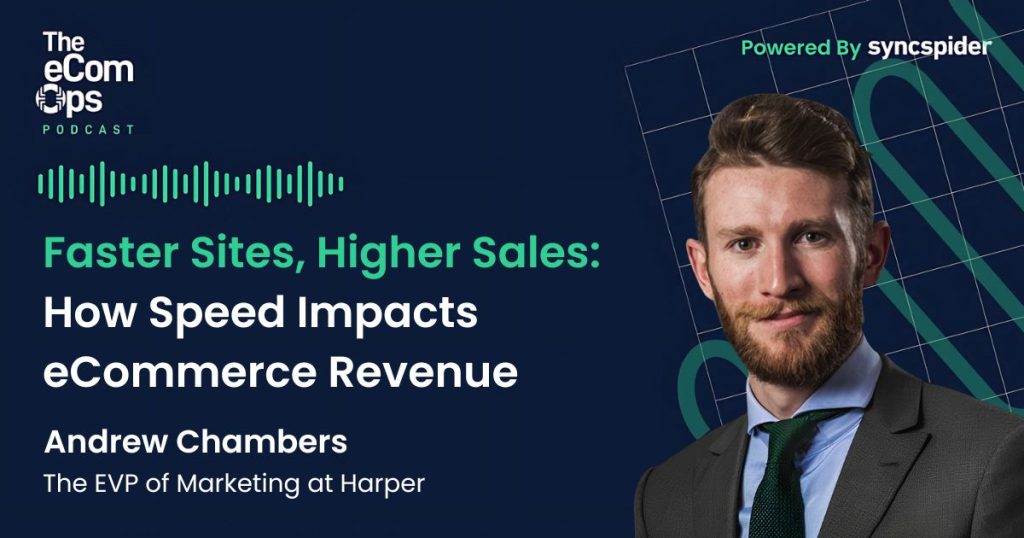
What if milliseconds could make or break your entire revenue stream? In this episode, we talk about the invisible force behind conversion, SEO, and digital growth – performance speed.
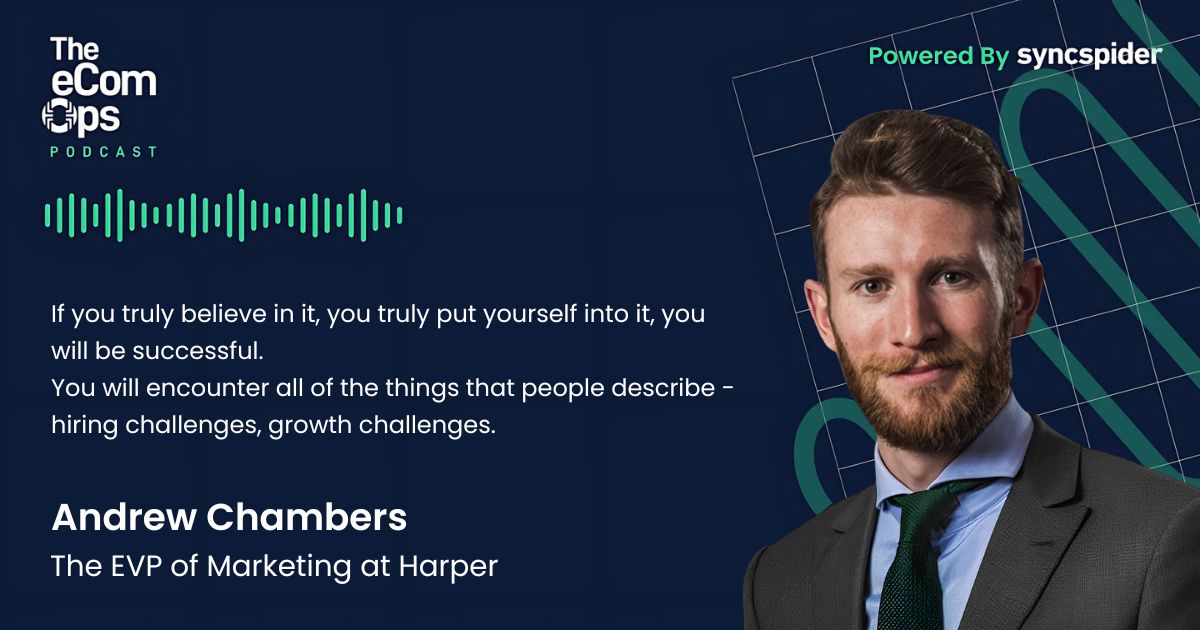
Andrew Chambers, EVP of Marketing at Harper, walks us through what it takes to keep enterprise-grade eCommerce sites blazing fast, resilient, and conversion-optimized—even during peak traffic moments like Black Friday.
If you’re struggling with slow load times, poor rankings, or low conversion rates, this is the episode you didn’t know you needed.
About
Andrew Chambers is a performance marketing expert with a deep background in eCommerce, SaaS, and startup growth. With two successful exits under his belt, he blends strategic brand storytelling with hard data and performance metrics to help high-traffic brands stay fast and scalable.
Harper is a next-gen application platform built for ultra-low-latency performance. It consolidates backend layers (API, messaging, caching, database, etc.) into one memory-based stack. Designed for high-scale eCommerce and enterprise sites, Harper helps companies reduce Largest Contentful Paint (LCP) from seconds to milliseconds, resulting in better SEO, conversions, and customer retention.
The Key Takeaways
What Outcome-Driven Marketing Looks Like
- Many brands focus too narrowly on ROAS without understanding customer LTV. Drew advocates for shifting the mindset toward six-to-twelve-month customer value, enabling smarter ad scaling and more confident investment across multiple channels (paid, organic, referral, etc.).
- He emphasizes understanding acquisition costs across all touchpoints to create a unified performance strategy, especially important when juggling channels like LinkedIn, Reddit, affiliate marketing, and more.
Why Speed is the New Competitive Edge
- Harper helps reduce LCP (Largest Contentful Paint) from ~2.5s to 180ms. According to Amazon, every 100ms costs you 1% in sales, so these changes are not cosmetic; they’re financial.
- Harper achieves this by flipping the traditional composable stack on its side—everything runs in-memory and concurrently, eliminating delays caused by handshakes between APIs, databases, and caching layers.
When Disaster Hits, Speed Saves the Day
- Drew shares a real use case of a major retailer whose site went down, but customers never noticed. Thanks to Harper’s pre-cached product pages, the brand continued to operate at top performance levels during the outage.
- The platform ensures business continuity even in emergency moments like Black Friday, turning potential downtime into seamless experiences (and revenue saved).
From Marginal Gains to Market Leaders
- Drew compares performance optimization to pro athletics, where milliseconds make all the difference. The brands that win tomorrow are already investing in fractional gains today.
- In the next 5 years, this level of speed will become standard. So the time to act is now, not when your competition has already caught up.
Resources Mentioned
- Core Web Vitals: LCP, CLS, INP
- Customer Lifetime Value (LTV)
- Google CrUX performance data
- Bandit Running (case example)
- Marginal marketing efficiency ratios
- Shopify, Amazon
- ChatGPT’s impact on SEO and discoverability
Conclusion
Speed isn’t just a tech metric—it’s your growth multiplier. As Drew puts it, milliseconds are millions. From boosting SEO to preventing cart abandonment, site speed affects every stage of the funnel. And the best part? These wins are measurable and repeatable.
See You on the Show!
Enjoyed this episode? Subscribe to the Ecom Ops Podcast for more behind-the-scenes insights from the sharpest minds in eCommerce, tech, and operations. If you’re scaling a digital business, we’ve got strategies you can actually use. And hey, your next big idea could be just one episode away.
If you’d like to be a guest or have a topic suggestion, reach out to us. We’d love to hear from you!
Stay tuned for our next episode!
The No.1 eCom Operations hack
“If you truly believe in it, you truly put yourself into it, you will be successful. You will encounter all of the things that people describe – hiring challenges, growth challenges.”